
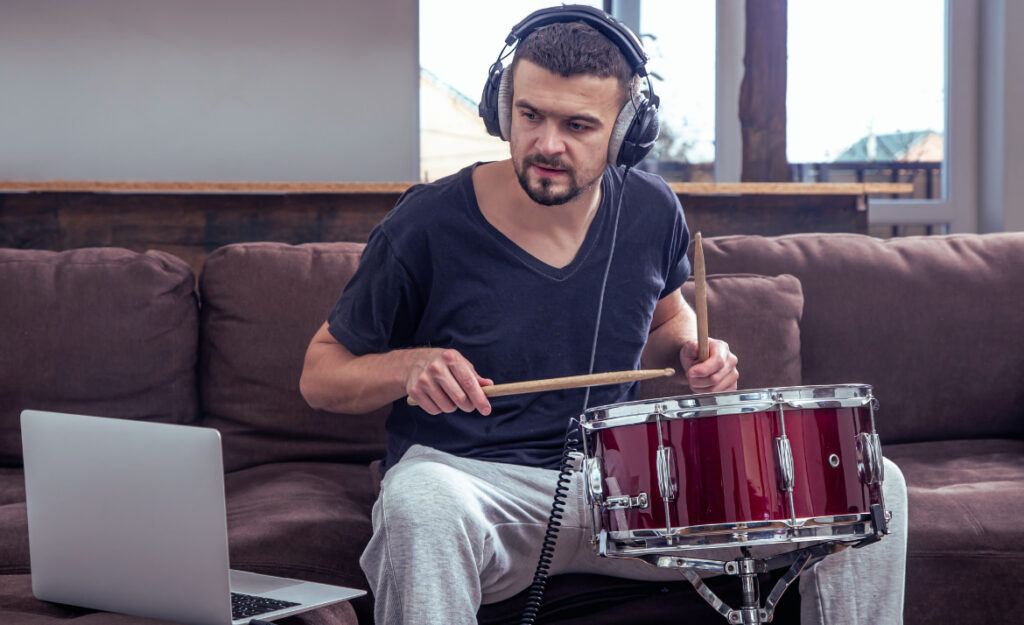

Playing grooves that lock in with a band can feel challenging at times. Practicing with metronome training helps drummers develop steady internal timing for any musical style.
Consistent rhythm forms the basis of clear, communicative drumming. The precision gained from metronome training elevates a player’s confidence, dynamic control, and creative expression in every practice session.
This guide details hands-on metronome training exercises, practical tips for diverse tempos, and a comparison of leading apps and tools—so you can unlock better timing on the kit.
Building Strong Rhythmic Foundations from Day One
Structured metronome training sharpens every drummer’s time sense. Starting slow and disciplined, the exercises outlined below guide new and experienced musicians alike to build a stable groove foundation.
By focusing on placement and consistency in each stick stroke, metronome training becomes a natural part of routine practice. Over time, it creates an internalized sense of steady pulse.
Practicing Quarter Notes with Patient Precision
Set your metronome to 60 bpm. Focus your attention on playing clean, even quarter notes that line up tightly to each click. Keep your sticks moving smoothly.
The goal with this metronome training is to place every note right with the pulse, listening for both stick and click simultaneously. This builds reliable timing from the very beginning.
Expanding to Eighth Notes with Consistent Energy
Once comfort with quarter notes grows, shift to eighth notes at the same tempo. Play two strokes for each click, maintaining balance between hands and a steady dynamic level.
This step in metronome training helps drummers notice any rushing or dragging between beats, refining control as they move from a basic to a more detailed rhythmic subdivision.
Exploring Subdivisions and Advanced Patterns in Daily Drills
Deepening your metronome training with subdivisions unlocks layered accuracy. These exercises gradually teach you to internalize complex patterns at every speed.
Sixteenth Notes for Focused Consistency
Practice sixteenth notes at 60 bpm. Alternate hands cleanly, ensuring four evenly spaced notes per click. The metronome training sharpens focus, helping spot weak spots in your technique.
As the tempo rises, staying relaxed becomes critical. Avoid tension for optimal flow across sticks and snare, building stamina and control through metronome training routines.
- Keep your wrists flexible while working through longer sets of sixteenth notes to prevent fatigue and maintain healthy drumming habits.
- Check posture frequently to support fluid, unrestricted movement during extended metronome training.
- Use practice pads to clearly hear timing issues if your drum set acoustics compete too much with your click track.
- Break exercises into one-minute focus segments, gradually adding time as your accuracy increases with each metronome session.
- Record yourself to review areas where the stick sound and metronome start to lose synchronization under pressure.
Consistent metronome training on subdivisions builds trusted muscle memory for any groove you’ll encounter in band settings, jams, or performances.
Adding Triplets for Versatility
Triplets demand a new kind of control. At 60 bpm, play three evenly spaced notes for each metronome click, accenting the first note for clarity.
Practicing triplets through metronome training enhances your ability to shift between straight and swing feels in any song or solo section.
- Isolate hands for single-stroke triplets before combining them to reveal strengths and weaknesses in your basic motion.
- Layer in foot patterns once stick control stabilizes, blending hi-hat or kick for synchronicity within the triplet frame.
- Try accent variations to add dynamics, building expressive control during metronome training beyond robotic uniformity.
- Set the metronome to every beat, then double the tempo to hear triplets at two different speeds for more depth.
Finishing each exercise session with triplet metronome training builds a foundation for many styles of jazz, shuffle, and R&B drumming.
Real-World Applications: Playing Tight in Any Group
Implementing metronome training into rehearsals transforms how you interact musically, from band practices to recording sessions.
The exercises outlined help develop confidence to remain steady, even when other players rush or drag, elevating group performance as a whole.
Live Band Rehearsal Integration
Use a visible metronome app on a phone beside your kit. Play through setlists, observing when bandmates push or pull tempo without singling anyone out.
This metronome training routine encourages communication, making it easier to suggest short group clicks on problem songs, solidifying groove as a unit.
Executing Studio Click Track Sessions
In studio environments, wearing headphones with a click is common. Practice staying relaxed, aligning fills and accents tightly with the recorded track and metronome pulse.
Running through different metronome training tempos before sessions reduces nerves, helping you maintain a strong pocket under recording conditions.
Comparing the Top Metronome Training Tools for Drummers
Choosing the right metronome app or device can speed up your progress. Below is a current comparison of widely used tools for metronome training across skill levels.
| Product | Key Features | Platform |
|---|---|---|
| Soundbrenner | Haptic wearable pulse, variable subdivisions, custom setlists | iOS / Android / Wearable |
| Tempo Advance | Subdivision cycles, polyrhythm support, easy mute/solo tracks | iOS |
| Pro Metronome | Visual flash, subdivided clicks, tap tempo, swing options | iOS / Android |
| Tama Rhythm Watch | Hardware device, programmable patterns, built-in speaker | Hardware |
| MetroTimer | Simple interface, tone options, full tempo range | iOS / Android |
Each tool offers unique features for personalized metronome training, from hands-free wearable pulses to visual flash for silent practice in group settings.
Branching Out: Custom Exercises for Diverse Skills
Customizing your metronome training unlocks growth in a wide range of technical and musical skills beyond basic beats and fills.
Ghost Notes for Subtle Groove Refinement
Ghost notes add texture and nuance to basic grooves. Practice between metronome clicks at moderate tempos, keeping these strokes almost inaudible compared to backbeats.
Metronome training with ghost notes helps develop touch, control, and dynamic contrast for funk, pop, and hip-hop drumming through intentional quiet stick placement.
Polyrhythms to Challenge Internal Clock
Set your metronome to a steady click. Play four-note hand patterns over three-note foot patterns for a 4:3 polyrhythm. Stay locked to the metronome pulse.
Doing metronome training with polyrhythms teaches independence and sharpens your ability to feel multiple layers of rhythm without losing one steady reference.
Linear Patterns to Build Creativity
Linear drumming means never hitting two surfaces simultaneously in a phrase. Practice simple linear patterns at slow tempos with a metronome, gradually increasing complexity.
Linear metronome training boosts creativity in fills and grooves, allowing you to discover new stickings while locking into a consistent, reliable pulse throughout.
Breaking down metronome training into these subcategories prepares you to handle any material found in drum books, recorded tracks, or live improvisation.
Connecting Metronome Training to Broader Musical Goals
Integrating metronome training into bigger musical contexts leads to well-rounded skill growth, allowing you to adapt your drumming to any environment or ensemble needs.
Refining Daily Solo Practice with Timing Awareness
Playing along with a metronome daily builds automatic accuracy, improving both rudiment drills and solo improvisation. This habit transforms basic routines into precision-based development.
Solo metronome training helps drummers self-correct, marking progress in groove stability and making it easier to learn complex patterns when returning to group settings.
Synchronizing in Ensemble Environments
Band rehearsals with a click prevent unintentional tempo shifts, especially in energetic settings. Bringing metronome training into group play tightens cohesiveness and mutual understanding of groove.
By rehearsing transitions and hard sections with a shared metronome, everyone builds trust, letting creative ideas evolve without worrying about losing the pulse mid-song.
Adapting Exercises to New Gear or Styles
Different pedals, sticks, or heads can affect feel and rebound. Integrate metronome training on new gear to adjust muscle memory before live shows or recording sessions.
Adapt familiar metronome exercises to new genres—try reggae, jazz, or metal kits—ensuring timing remains secure no matter what sound or setup you choose.
Combining these approaches means metronome training becomes a tool for versatility and growth, not just routine practice.
Sustaining Progress: Troubleshooting and Building Habits That Last
Sticking with metronome training can test patience, but overcoming common timing setbacks builds lasting results. Recognize typical challenges and shape solutions for steady improvement.
Some drummers struggle with rushing fills or losing pulse during quiet sections. Dial back the tempo by 10 bpm and repeat, using deliberate listening to anchor each note accurately.
If mistakes persist after slowing down, pause to analyze specific sticking or motion issues. Recording practice sessions and playing them back with the metronome helps pinpoint what needs focused attention the next time.
Continued Growth through Metronome Training Techniques
Consistent metronome training transforms not just practice, but performance, by creating a rhythmic foundation every musician can rely on in any situation.
Applying exercises, experimenting with new tools, and integrating timing awareness into creative work expands your drumming vocabulary for every genre or project.
With patient, active engagement in metronome training, progress becomes steady and reliable, supporting your personal evolution as a confident, musical drummer.