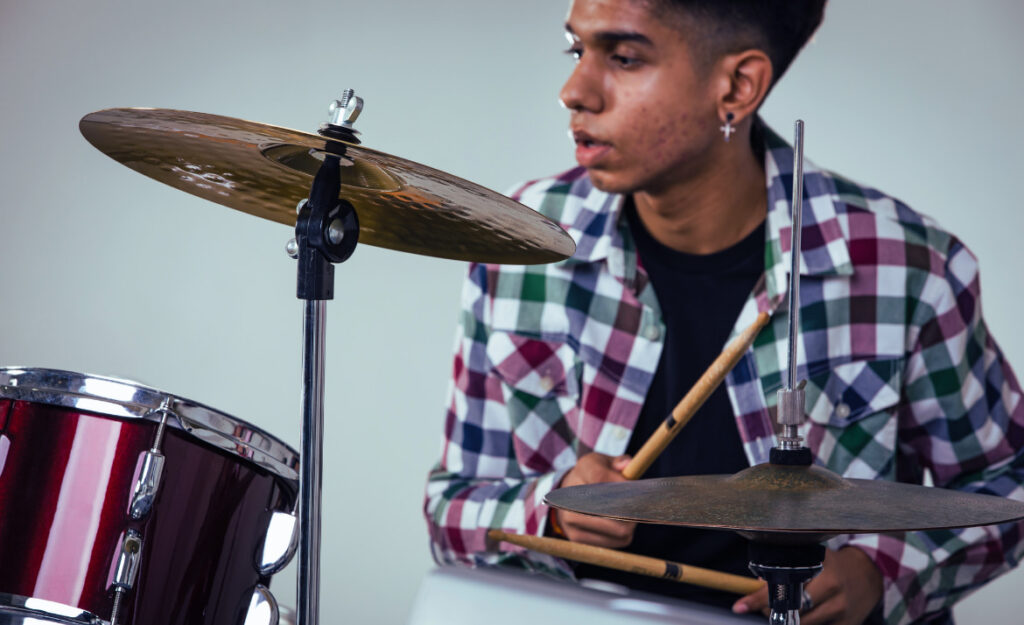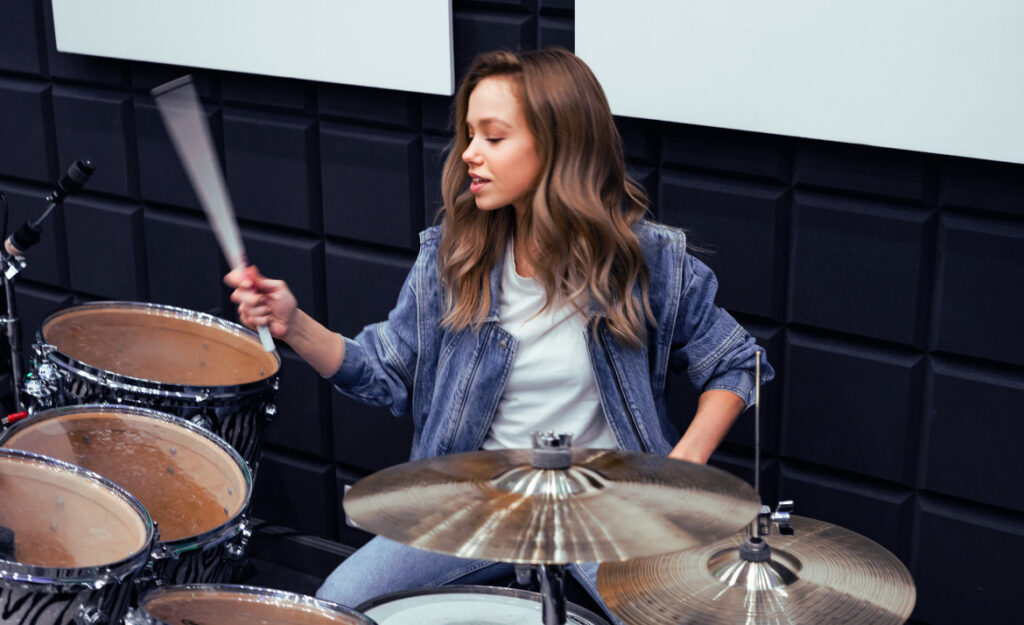
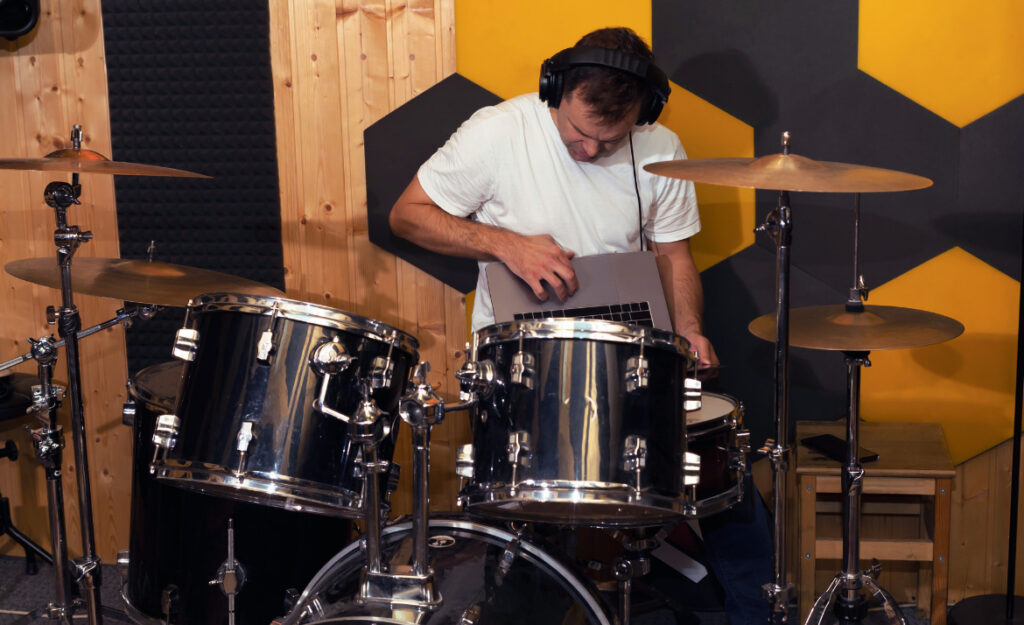
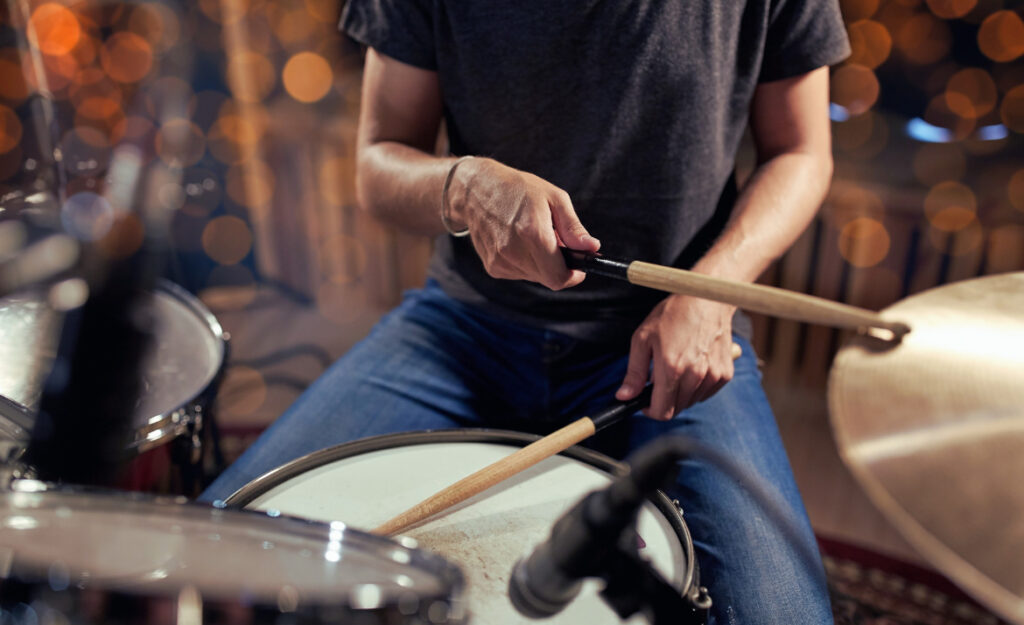
Many drummers chase musical expression but feel limited by rote memorization or mechanical practice. A well-developed ear guides musical choices in any situation on the drum kit.
The skill of ear training for drummers empowers players to respond to bandmates, create melodic ideas, and truly support the music beyond keeping time. This skill expands creative options endlessly.
This article explores practical ear training methods for drummers. You’ll learn step-by-step ways to improve listening, groove, melodic sensitivity, timing, and ensemble interaction, while leveraging current resources and smart habits.
Strengthening Core Listening Skills for Musical Drummers
Ear training for drummers starts with identifying basic rhythm, pitch, and dynamics. Developing these skills early on pays off in every style and musical setting.
Recognizing the tonal center and rhythmic foundation helps drummers anticipate changes, lock with the groove, and add creative, song-serving ideas behind the kit.
Understanding Pulse and Subdivision
Distinguishing subdivisions and pulse lets drummers respond dynamically to the music. Focused listening to hi-hats, ride patterns, and bass lines helps clarify rhythmic relationships instantly.
Clapping or tapping subdivisions apart from the drum kit solidifies this skill. Drummers who practice this become better at controlled improvisation and interpret cues from other musicians accurately.
Active Melodic and Harmonic Recognition
Ear training for drummers involves hearing melodic movement, not just rhythm. Humming along with bass or vocal lines teaches the mind to anticipate musical phrases and respond musically.
Listening for chord progressions during rehearsals cultivates quick reactions. Drummers who practice melodic recognition shape fills and accents that complement melodies seamlessly.
Using Call-and-Response Exercises to Build Quick Recall
Call-and-response drills sharpen a drummer’s ability to hear and mimic musical ideas, supporting quick adaptation in rehearsals and live settings every time the music changes.
Practical Call-and-Response Routines
Pair up with another musician, trading short rhythmic or melodic phrases. Start with simple patterns on snare or practice pad before moving to more nuanced grooves.
Ear training for drummers accelerates learning when you repeat these drills regularly, focusing on both accuracy and feel in every musical conversation.
- Join drum circle groups where one drummer leads a phrase, and others echo the pattern, reinforcing attentive listening and memory.
- Record short phrases and try to copy them with your kit, analyzing subtle timing differences or accents as you improve.
- Use backing tracks with call-and-response sections for isolated or song-length practice, prioritizing clean articulation and groove while playing along.
- By varying tempo or instrumentation, build real-world flexibility and anticipate changes under pressure in full band situations.
Pairing call-and-response with varied styles—from funk to jazz—widens musical vocabulary, making ear training for drummers relevant for virtually any genre or band lineup.
Mirror Exercises with Technology or Live Musicians
Apps like DrumGenius and Melodics offer interactive tools where you echo grooves or fills, pushing your ear and memory in new directions every session.
Working with a metronome that changes accents also challenges the ear, forcing adaptation and tight syncing with moving targets for stronger musicianship.
- Try online videos where drummers play licks, then pause and echo the line exactly before moving on.
- Leverage loop pedals to play your own call-and-response patterns, stacking layers for more creative interplay in real time.
- Practice with a teacher or peer, responding instantly to cues while monitoring your progress over several sessions.
- Gradually shorten the listening-to-response time to simulate real gig or jam situations, increasing speed and confidence with each round.
Mirror work cements the ear’s ability to perceive, internalize, and reproduce music on demand—skills drummers use on stage and in practice every day.
Applying Ear Training to Real Band Settings and Arrangements
Directly connecting ear training for drummers to live performance scenarios ensures long-term growth and musical confidence behind the kit.
Integrated exercises reduce surprises on stage, allowing drummers to support their bandmates musically and remain adaptable when songs take new directions unexpectedly.
Reacting to Dynamic Changes in Songs
Listen intently during band rehearsals for shifts in energy, tempo, or arrangement. React by varying stick dynamics, fills, or groove intensity to fit the new musical context.
If vocalists or soloists increase volume, drummers can lift or ease off their playing, preserving balance through attentive ear training and sensitive listening as situations evolve.
Matching and Contrasting Other Instruments
Lay down grooves that echo the rhythm of guitar or keyboard parts. Use the snare or kick to reinforce melodic accents, making musical phrases hit harder with every repetition.
When the music changes, ear training for drummers supports creative responses—switch from complementing the groove to contrasting it, adding tension or excitement while still serving the song.
Current Ear Training Tools and Apps for Drummers Compared
Today’s drummers benefit from digital tools that teach ear training through targeted games, interactive tracks, and instant feedback. Each app focuses on different learning angles and skillsets.
Choosing the right resource accelerates ear training for drummers by breaking down complex skills into manageable parts suited for beginners and advanced players alike.
| App/Platform | Main Features | Best For |
|---|---|---|
| Melodics | Interactive pads, real-time feedback, structured lessons | Rhythm awareness, instant correction, progressive practice |
| Soundbrenner | Customizable metronome, groove exercises, tempo training | Timing improvement, personalized subdivisions, groove control |
| Tenuto | Ear training games, interval recognition, note identification | Pitch awareness, music theory basics, melodic training |
| DrumGenius | Premium play-along tracks, genre variety, tempo adjustment | Realistic band play, style exploration, improvisation |
| Rhythm Trainer | Random rhythm dictations, sight-reading challenges, response drills | Sight reading, quick recall, interactive discipline |
The variety of options ensures every drummer can find a format for ear training that fits their skill level, equipment, and musical interests instantly.
Breaking Down Ear Training Into Manageable Practice Routines
Segmenting ear training for drummers into weekly routines simplifies the process and embeds growth into each session—no matter a drummer’s starting point or musical background.
Short Daily Listening Sessions
Start every practice by focusing on one musical element—be it bass lines, vocal melody, or guitar riff—and hum, tap, or play along for five minutes.
This concentrates the ear on specific details, making music analysis effortless over time. Commitment to repetition ensures lasting results and builds confidence fast.
Integrated Practice With Song Covers
Pick favorite songs and transcribe their drum parts by ear, focusing on phrasing, dynamics, and subtle variations. Playing along sharpens internal timing immediately.
Recording yourself against original versions points out discrepancies, allowing ear training for drummers to yield clear improvements with each playback session and cover attempt.
Rotating Groove and Fills Challenges
Alternate between pure groove play-alongs and improvisational fills. Switch up genres weekly, so each area of the ear is challenged equally throughout the month.
Rotating tasks keeps motivation strong, and covers all core ear training for drummers in a fresh and stimulating way every session.
These routines break big goals into daily actions, reinforcing progress and building musical awareness with every focused practice block.
Relating Ear Training to Everyday Practice and Group Play
Applying ear training for drummers repeatedly during personal practice and live sessions strengthens retention, allows experimentation, and builds deeper connections to the music at every level.
Embedding Ear Training in Warm-Ups
Start sessions with metronome-clapping, singing rhythm syllables, or counting subdivisions out loud. Change song tempos and time signatures regularly to challenge recognition of new musical patterns.
Over time, these rituals cement rhythmic instincts and subdividing skills, making complex arrangements easier to play and react to from memory during performances and rehearsals.
Interactive Group Rehearsals
During band practices, deliberately mute parts and focus on listening. Fill in missing grooves by ear, turning omissions into active learning opportunities and ensemble tightness exercises.
Rotating leadership in jam sessions also cultivates team listening, making ear training for drummers integral to a group’s overall sound development and cohesion.
Adapting Ear Training for Independent Study
If practicing alone, use backing tracks or create looped phrases to simulate group interplay. Regularly test yourself by removing visual cues to push aural recall further each session.
This self-driven method works for drummers at any stage and adapts as you progress, ensuring constant challenge and measurable improvement in musicianship across contexts.
Integrative habits reinforce ear training for drummers as a permanent part of personal and group musical growth.
Troubleshooting Common Pitfalls and Maintaining Progress
Some drummers struggle to internalize ear training concepts or become discouraged by slow progress. Addressing blocks with specific adjustments increases retention and keeps enthusiasm high.
Setbacks arise when focusing too much on one element—timing, pitch, or genre. Well-rounded routines, regular review, and accountability partners restore balance to ear training for drummers.
Celebrate small wins like cleanly echoing a phrase, nailing a groove by ear, or adapting mid-song. Consistency ensures ongoing growth and musical confidence over time, regardless of obstacles faced.
Taking Drummers’ Musicality to the Next Level
The best ear training for drummers goes beyond drills and integrates deep listening, quick adaptation, and expressive communication as part of daily musical life.
These habits enhance a drummer’s impact within any band—unlocking new artistic possibilities and making every performance more engaging, sensitive, and cohesive.
Explore different ear training approaches, and experiment regularly to find the methods that resonate and yield steady results, building lasting musicianship for drummers at all stages.