Every drummer remembers flipping through pages of drum books, discovering new grooves, and finally mastering a fill that once seemed impossible. That process shapes your journey.
Building strong skills requires resources that challenge and inspire growth. Drum books gather decades of wisdom, offering structured methods to refine your technique, independence, and musicality on the drum set.
This article examines drum books that consistently help drummers advance, explains their specific benefits, compares notable titles, and reveals how these guides can elevate your playing at any level.
Foundational method books that build lifelong technique effectively
Working with foundational drum books leads to real technical improvement you can feel each week. Their structure supports habits that last for your entire drumming journey.
These drum books focus on building hand technique, stick control, and coordination. Practicing their exercises trains your muscles to respond cleanly and with purpose at any tempo.
Rudiments and efficient hand development approaches
Including rudiments in your daily routine, as suggested by trusted drum books, increases speed and control. Rudimental practice remains a keystone for every generation of drummers.
Savvy teachers have always leaned on these pages for proven technical drills. Students still rely on essential drum books to build strong hands and reliable sticking patterns every year.
Core reading and sticking pattern foundations
Reading exercises from classic drum books widens your understanding of rhythms found in various genres. Not only do you get faster with notation, you gain ideas for creating your own fills.
Practicing sticking variations within these method books prevents monotony. Each page builds a useful foundation, supporting confident improvisation and natural movement between drums.
Drum set independence and versatility for all musical styles
Learning independence from well-designed drum books translates to authentic playing in jazz, funk, rock, or Latin drumming. This unlocks versatility every modern drummer needs.
Ostinato patterns for layered coordination
Independence-building drum books commonly use ostinatos, requiring you to maintain one rhythm while moving another limb deliberately. This skill is vital for advanced and creative styles.
Focusing on ostinatos builds mental flexibility. It keeps your hands and feet communicating accurately, even during challenging ensemble passages or improvisation in live performance settings.
- Use a metronome to lock in your ostinato until it becomes second nature, as recommended by most coordination-focused drum books.
- Start every new exercise at a slow tempo, ensuring clarity and precision before increasing speed.
- Break down complex exercises into smaller segments to master one pattern at a time.
- Combine ostinatos with simple fills to hear how layered patterns interact in practice and performance.
Regularly revisiting independence exercises helps you grow gradually, reducing frustration and preventing plateaus in your progress as suggested by leading drum books.
Dynamic interplay and genre adaptation exercises
Dynamic exercises in drum books develop your sensitivity to volume, touch, and musical space. This allows you to adapt your playing across jazz balls, rock anthems, and contemporary pop tunes fluidly.
Working through genre-specific drum books also improves your groove, timing, and adaptability in group settings or solo performance situations distinctly.
- Choose one genre per practice week to focus on its unique drum patterns and dynamics from relevant drum books.
- Pair groove exercises with actual song play-alongs for immediate real-world application of your progress.
- Record yourself performing patterns at differing volumes to identify strengths and areas to refine.
- Swap drum books every month to shift your attention between styles, preventing creative stagnation.
This targeted approach leads to confident transitions between styles, enhancing your reputation and enjoyment both live and in the studio.
Iconic drum books and their real-world impact on players
Specific drum books achieve classic status by transforming countless players’ abilities. These have shaped legendary drummers and inspired creative breakthroughs across musical generations.
Stick Control’s impact on drumming basics and endurance
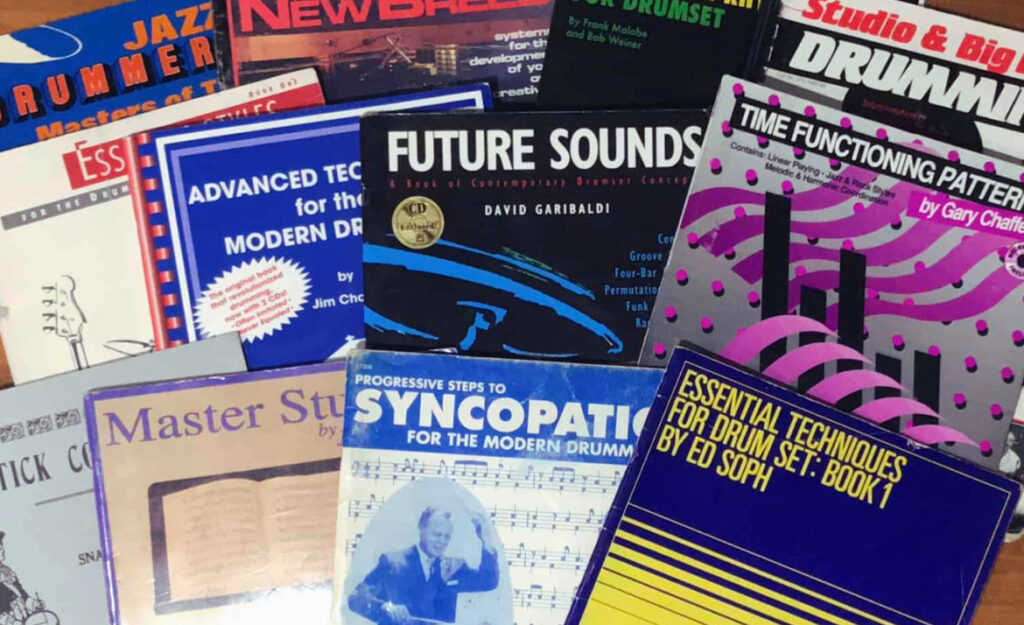
George Lawrence Stone’s Stick Control appears on every serious drummer’s bookshelf. Its simple yet varied sticking patterns challenge muscle memory and rhythmic stability at all skill levels.
Daily repetition of Stick Control’s prescribed exercises strengthens your wrists and fingers. Over time, you develop an effortless stroke that makes even complex patterns feel natural on the kit.
Syncopation and creative phrasing development
Charles Wilcoxon’s Modern Rudimental Swing Solos uses advanced notation to teach creative phrasing. Many use this book to expand their ability to shape lines and phrases with inventive accents.
By interpreting syncopated passages, you quickly learn to play across the beat, adding flavor and excitement to your solos, fills, and written drum parts in school, studio, or on stage.
Comparing leading drum method books and online study options
Choosing among classic drum books and online tools can feel overwhelming. Each resource provides a unique approach, set of exercises, and supplemental materials for your progression.
Carefully selected books and modern digital resources both offer structured, self-paced learning. You can use them separately or together, reinforcing classic techniques and exploring current innovations.
| Resource | Strengths | Best For |
|---|---|---|
| Stick Control by G.L. Stone | Sticking patterns, hand speed, endurance | All drummers, beginners to pros |
| Syncopation by T. Reed | Reading skills, syncopated patterns | Developing reading, phrasing, big band playing |
| Drumeo (Platform) | Video lessons, interactive tools, community | Visual learners, guided programs, modern study |
| Tommy Igoe’s Groove Essentials | Contemporary grooves, play-along tracks | Building genre versatility, practical application |
| Mel Bay’s Drum Method | Step-by-step progression, accessible exercises | Absolute beginners, structured practice |
| Vic Firth Education Resource | Free PDFs, video demonstrations | Supplemental drills, visual feedback |
This comparison underlines how mixing key drum books and creative tools customizes your learning, reinforcing both fundamental skills and modern drumming demands.
Customized practice paths using targeted drum books
Targeted drum books allow you to address shortcomings and maintain engagement through gradual increases in challenge level and musical variety day after day.
Technique boosters for advanced progress
Advanced drum books, like Gary Chaffee’s Patterns series, enable focused improvements with polyrhythms and creative exercises that shake up your daily routine as an experienced player.
These books challenge you beyond comfort zones, guiding your coordination and vocabulary to new places. Extra motivation comes from noticeable weekly skills jumps while progressing through chapters regularly.
Creative fill and soloing study for self-expression
Focusing on fill and soloing books, such as David Garibaldi’s Future Sounds, encourages creative expression. Each exercise pushes your phrasing, groove, and musical storytelling to exciting new territory.
Drummers return to these books when seeking inspiration for solo sections, learning new approaches to shaping a drum break or adding color to a song’s arrangement beyond standard patterns.
Practice pad and warm-up strategies for daily consistency
Drum books like The 4-Way Coordination by Marvin Dahlgren fit perfectly for pad work sessions. They’re compact yet effective for warming up and maintaining skill in limited spaces.
Daily warm-up books maintain muscle memory, prevent downtime injury, and structure your consistent improvement—making them essential for long-term development as highlighted in most drumming curriculums.
These methods connect your daily habits with your long-term technical and musical goals, underscoring the practical role drum books play at every career stage.
Navigating drum books’ influence in group play and lesson settings
Drum books aren’t just solo study tools; they foster group interaction, help structure private lessons, and build common vocabulary among bandmates and teachers alike.
Ensemble readiness through shared exercises
When everyone in a music group practices exercises from the same drum books, communication and execution become tighter. Ensemble performances benefit from this shared technical language.
Syncing up bass and drum lines based on book exercises yields a unified feel and cleaner grooves, especially in rehearsal and performance environments from clubs to major venues.
Supporting lesson flow with level-appropriate material
Private teachers rely on established drum books to provide structured advancement for students. Books chart progress, deliver reliable benchmarks, and facilitate immediate feedback during each session.
Teachers switch between classic and modern books to keep students engaged while systematically covering technique, reading, and creative drumming skills efficiently over time.
Personal accountability in peer or online groups
Study groups, both local and virtual, keep everyone accountable by working through shared drum books. Regular check-ins support feedback and spark motivation while learning new material together.
Online forums recommend drum books for specific goals, connect players worldwide, and introduce like-minded drummers to new authors and effective methods they might not find alone.
This collaborative approach reinforces the social aspects of drumming and makes studying drum books an ongoing, interactive pursuit.
Troubleshooting stagnation and evolving your study approach
Plateaus are a natural part of any practice routine, but shifting to new drum books or changing your daily approach can spark renewed progress and excitement at any level.
If you notice boredom or technical setbacks, consider adding a different style-focused drum book or exploring a series devoted to creativity and improvisation above basic coordination drills.
Some drummers find immediate progress by joining a community that swaps book recommendations, breaking old habits, and refreshing their entire approach with new methods and ideas.
Expanding your drumming journey with essential drum books
Every drummer gains a fresh perspective and improved skill set by working through curated drum books. Structured learning keeps you accountable while also sparking creativity in every session.
Combining classic print books and carefully chosen digital resources provides the best of both worlds: reliable technique improvement and inspiring ways to write or play music more naturally.
A steady investment in drum books sustains your growth. Setting aside time for these resources weekly builds lifelong confidence and musical fulfillment throughout your drumming adventure.