

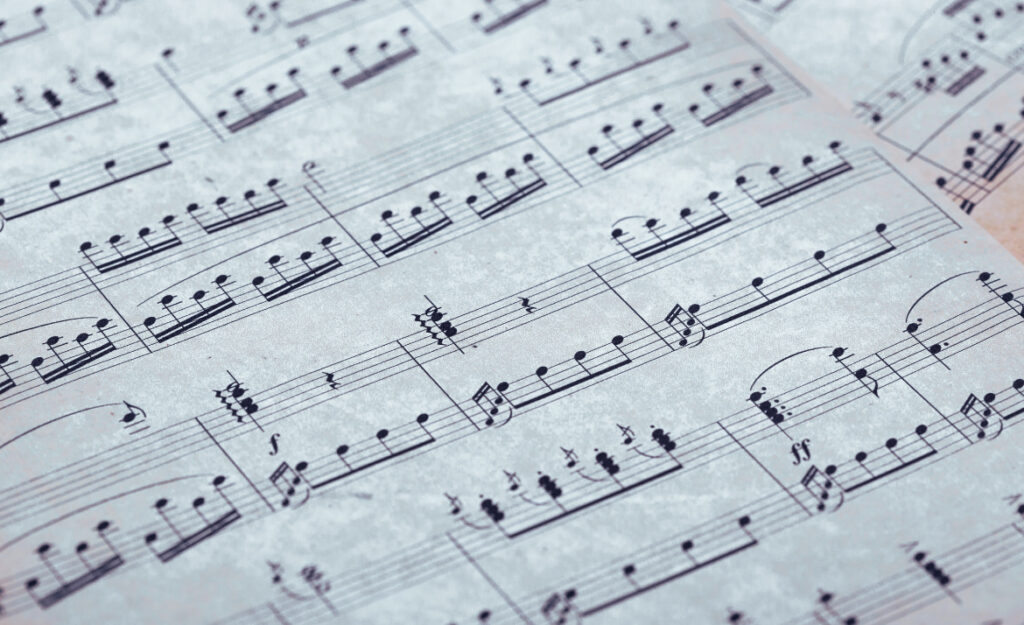
Learning to play rhythms from printed pages can feel overwhelming, especially for newcomers. If you want to understand complex patterns, reading drum sheet music opens many doors.
Every drummer benefits from decipheringsheet music, whether playing in a band or just practicing at home. This skill is central for progress, communication, and creative exploration in drumming.
This article guides you step by step through interpreting sheet music, demystifying symbols, understanding note placement, and applying these concepts directly to the drum set.
Identifying symbols and layouts in drum sheet music
Recognizing basic symbols found insheet music helps drummers confidently interpret rhythms and orchestrations right from the start. Knowing these will streamline your practice.
Each element, from note heads to rests, has a distinct role on the staff. Every symbol you decode brings new clarity and precision to your playing experience, especially in group environments.
Learning the staff and drum placement rules
The drum staff consists of five lines. Each represents a specific instrument. Hi-hats, snares, and toms have unique positions, all standardized for easy reading across compositions.
Accurately spotting where drum parts fall on the staff cuts confusion. This translates musical ideas into playable patterns with consistency, no matter which drum sheet music you use.
Deciphering rhythmic notation and rests
Note values indicate how long a drum is struck or silent. Quarter, eighth, and sixteenth notes commonly appear, as do their related rests, guiding your timing and dynamic expression authentically.
Reading drum sheet music involves counting carefully along with these note values, ensuring precision in practice and performance, from the first bar to the last measure.
Interpreting tempo, dynamics, and articulations
With a grasp on basic symbols, you can now express a wider range of tempo, intensity, and feel through sheet music markings. This elevates performances beyond just playing correct notes.
Tempo markings: Setting your speed
Tempo indications, such as Allegro or quarter note equals 120, shape the speed of your playing. Always set your metronome to match these signals before starting to play.
Recalling tempo instructions each time you practice reinforces accuracy and fosters stylistic awareness, whether you’re working on a groove or a challenging fill from drum sheet music.
- Check all tempo markings before you begin a new piece for better preparation
- Use a digital metronome to set your starting pace in line with the sheet notation
- Gradually increase the speed as your confidence grows with accurate execution
- Record yourself to gauge if your pace matches the written tempo consistently
- Mark challenging sections to revisit at slower speeds until fluent with the tempo
Doing this grounds your reading skill with real musical context, supporting your daily progression on drum sheet music.
Dynamics and accents for musical detail
Dynamic markings—such as forte or piano—guide your volume and touch. Accents indicate which notes to emphasize, adding life and clarity to drum sheet music passages.
Observe crescendos, decrescendos, and accents throughout each bar. This makes your drumming musical and expressive, not just mechanically accurate, whenever you read new scores.
- Highlight dynamic symbols using pencil for fast recognition during rehearsals
- Practice sections at different dynamic levels to build versatility and control
- Play accents with clear wrist motion to bring out musical phrasing
- Listen to recordings while following along for practical reference to dynamics
- Record your practice to ensure dynamic accuracy, adjusting as you compare to the drum sheet music
With keen attention to dynamics, your playing reflects the full intent of drum sheet music, making each performance engaging and precise.
Applying practical reading strategies
Once familiar with foundational concepts, leveraging simple strategies to read drum sheet music in real-time builds confidence and practical skill.
As you encounter various styles, adjust your reading approach to address different time signatures, patterns, and interpretational nuances unique to the genre or arrangement.
Reading ahead to maintain flow
Scan a few beats or measures ahead as you play. This prevents hesitation and helps you anticipate changes smoothly, a critical principle in reading drum sheet music efficiently.
Combining this with metronome use strengthens your steadiness and prepares you for ensemble contexts where timing is crucial for all members.
Chunking measures for easier comprehension
Break down complex passages into smaller sections. Practice each chunk repeatedly, then join them together for seamless recall and interpretation of challenging drum sheet music lines.
This method is valuable for intricate fills or syncopated rhythms, reducing mistakes by isolating tricky parts before merging them in full context.
Comparing sheet music resources and tools
Reliable drum sheet music sources and reading tools can boost your learning curve significantly, providing diverse arrangements and interactive elements for growth.
Here’s a table summarizing popular apps, websites, and educational platforms for accessing and practicing drum sheet music:
| Platform/App | Features | Supported Formats |
|---|---|---|
| Drumeo | Extensive song library, video lessons, interactive sheet reader | PDF, Interactive, MIDI |
| Musicians Institute Library | Print-ready sheet music, library access, lesson integration | |
| Noteflight | Online notation editor, sharing, playback functions | Interactive, PDF, XML |
| Flat.io | Collaborative music editor, score sharing, mobile support | PDF, Interactive, XML |
| Sibelius | Professional notation, score editing, playback engine | PDF, MIDI, XML |
Utilizing these platforms helps you explore structured drum sheet music in varied formats, ensuring access to high-quality material as you refine your reading skills.
Exploring nuanced concepts in drum notation
Beyond basics, drum sheet music includes unique articulations, sticking indications, and percussion-specific symbols. Understanding these expands your vocabulary and performance authenticity.
Advanced sticking and ghost notes
Sticking patterns noted as R (right) or L (left) streamline complex passages. Ghost notes show lighter strokes with parentheses, demanding precision for realistic drumming dynamics.
Both features appear in funk, jazz, and fusion drum sheet music, where articulation and subtlety shape groove, texture, and style.
Interpreting drum kit orchestration
Orchestration tells which drum or cymbal to strike—ride, crash, high-tom—via placement or specific notation. This ensures you deliver each part’s intended timbre from written drum sheet music.
Learning these cues allows for smoother transitions and clear interpretations when switching between surfaces, an essential practice for modern drummers.
Alternate notation and ensemble charts
Alternate notation might group toms or show ensemble hits above the staff. Big band drum sheet music adds rhythm section cues for coordinated accents and punches.
Recognizing these elements enables you to participate in larger ensembles or cover songs accurately with minimal confusion and rehearsals needed.
Decoding each notation style reinforces your independence and flexibility as a reader and performer of various drum sheet music.
Relating sheet music reading to practice and collaboration
Internalizing drum sheet music concepts enhances individual practice and fosters smoother collaboration in group settings or recording scenarios.
Daily practice routines for fluency
Structured reading exercises, starting simple and progressing to challenging scores, gradually build fluency. Combine sight-reading with familiar rudiments to develop adaptable chops from the drum sheet music.
Include practice with click tracks, backing tracks, or apps to reinforce real-world musical application, rooting every improvement in actual drum sheet music passages.
Ensemble rehearsal communication
Bringing drum sheet music to rehearsals streamlines discussions about form, fills, and transitions. Written notation clarifies expectations, decreases confusion, and speeds group learning significantly.
Sight-reading with other musicians strengthens your ability to respond to cues, dynamics, and unexpected changes in live or studio settings.
Leveraging technology for remote collaboration
Sharing drum sheet music files online with bandmates or teachers enables asynchronous collaboration. Modern notation apps support markup, comments, and real-time playback for streamlined discussions.
This encourages long-distance projects, where detailed feedback and revisions can be instant, all anchored in shared, digital drum sheet music sessions.
Using drum sheet music as a collaborative tool ensures creative ideas are not lost and everyone stays in sync, whether jamming live or producing remotely.
Overcoming challenges and building accuracy
Clear strategies for overcoming reading hurdles ensure steady progress and prevent discouragement in the journey toward accurate drum sheet music reading skills.
Focusing on gradual increases in complexity and using real-time feedback tools reduces frustration, replacing guesswork with measurable improvement, especially in intricate patterns.
When mistakes happen, slow the tempo, isolate error-prone measures, and revisit the notation in detail. This corrects errors efficiently and reinforces strong muscle memory from drum sheet music practice.
Summary and next steps in drum sheet reading
Developing confidence in drum sheet music reading unlocks new creative paths, whether interpreting songs, transcribing drum parts, or improvising with intention and accuracy.
Each strategy discussed deepens your musical literacy and positions you to play in broader musical contexts and with diverse collaborators.
Maintain steady practice and active engagement with drum sheet music resources, and you’ll find your reading skills support every aspect of drumming, from rehearsal to performance.